The Danish West Indies flag is a symbol of Danish sovereignty that represents a fascinating part of Caribbean colonial history. This unique flag flew over the islands of Saint Thomas, Saint John, and Saint Croix until 1917, signifying Denmark’s presence in this tropical paradise.
Design and Significance
The flag was designed with a vibrant blue background and featured the Dannebrog, Denmark’s national flag, prominently displayed in the corner. This distinctive combination served as a powerful visual representation of Danish colonial authority while also reflecting the maritime nature of these Caribbean territories.
Exploring the Untold Story
In this article, we will explore the untold story behind this forgotten banner:
- The historical context of Denmark’s Caribbean colonies
- The flag’s distinctive design elements and variations
- Its role in shaping colonial identities
- The transition to American rule in 1917
- The flag’s lasting legacy in Caribbean history
By examining this lesser-known emblem, we can gain valuable insights into the complex relationships between European powers and their Caribbean territories during the colonial era. Additionally, we will delve into the evolution of flag design to further understand the symbolism, history, and principles of vexillology associated with lost banners.
The Danish West Indies flag serves as a testament to a unique chapter in both Danish and Caribbean history – a story that is waiting to be rediscovered.

Denmark’s Caribbean Colonies and the Emergence of the Danish West Indies Flag
Denmark’s Caribbean colonial expansion began in 1672 when the Danish West India Company established its first settlement on Saint Thomas. The colony grew with the acquisition of Saint John in 1718 and Saint Croix in 1733, forming a strategic triangle of Danish influence in the Caribbean.
The Role of the Danish West India Company
The Danish West India Company wielded significant power through its monopoly on trade and colonial administration. From its headquarters in Copenhagen, the company orchestrated complex trading networks linking Denmark, West Africa, and the Caribbean islands. These routes became notorious for their role in the transatlantic slave trade, with Danish ships transporting enslaved Africans to work on sugar plantations.
The Design and Significance of the Flag
The flag that emerged during this period reflected Denmark’s maritime presence in the Caribbean. Its design featured:
- A distinctive blue field symbolizing the sea
- The Dannebrog (Danish national flag) positioned in the canton
- Two main variants:
- Rectangular flags for official buildings and ceremonies
- Triangular pennants for merchant vessels
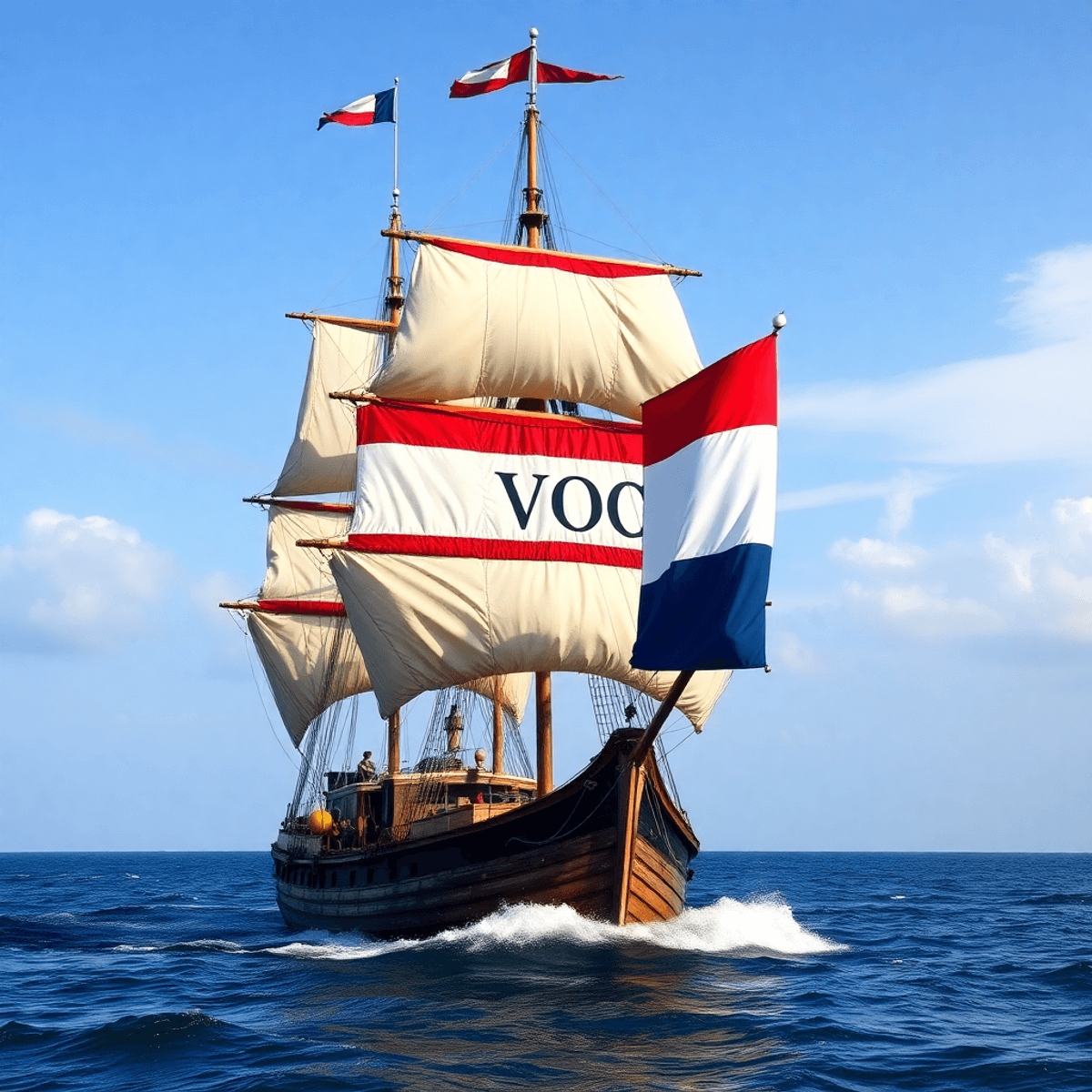
Ships trading with the Danish West Indies typically displayed these flags at the foretopmast rather than the stern, where the official Danish ensign flew. This practice distinguished vessels engaged in colonial trade from other Danish maritime traffic.
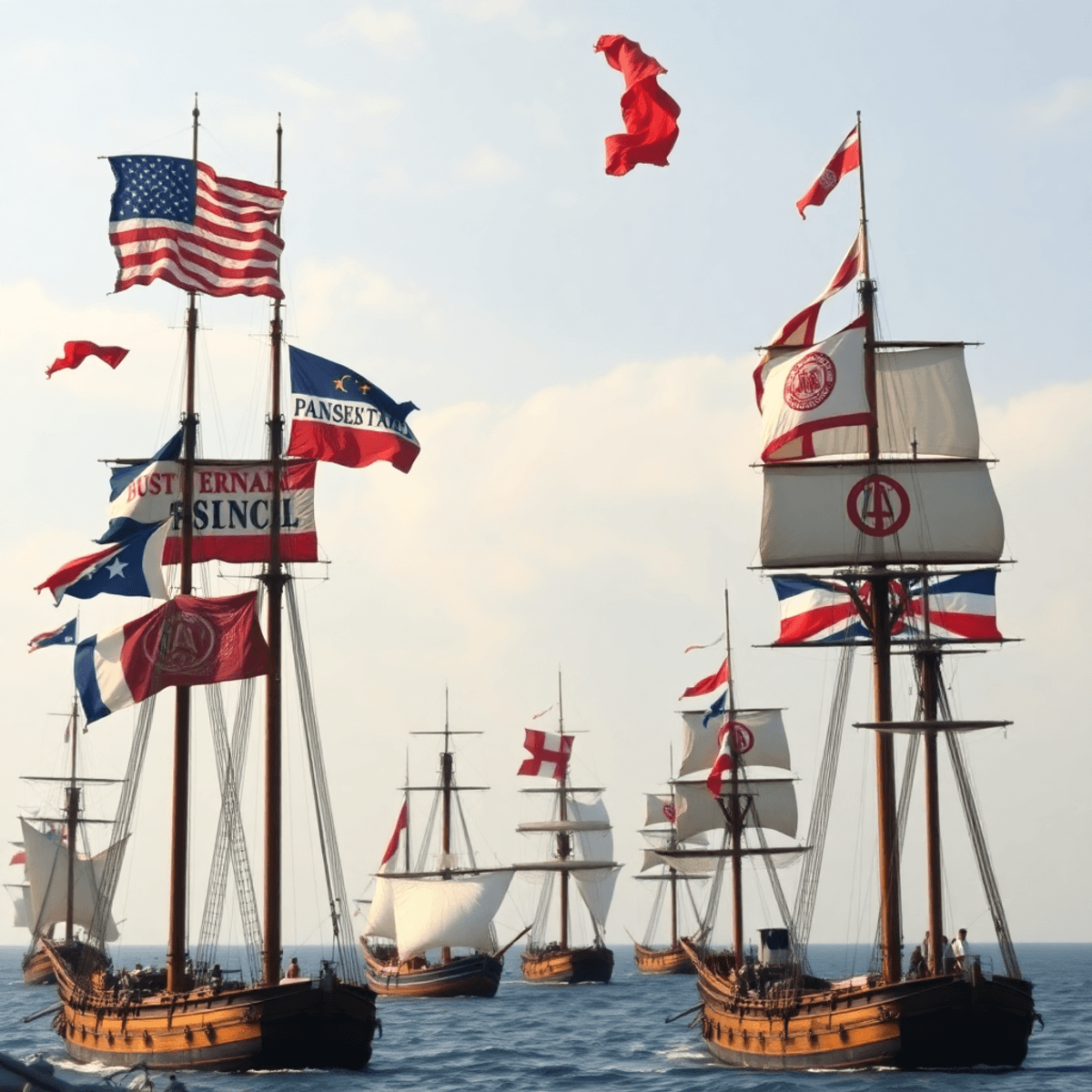
The flag’s blue field with the Dannebrog canton became a recognizable symbol throughout the Caribbean, marking Denmark’s territorial claims and commercial interests in the region. Merchant ships, colonial administrators, and local authorities used these banners to assert Danish sovereignty across their Caribbean possessions.
The Symbolism Behind the Flag and Its Role in Shaping Colonial Identities
The Danish West Indies flag served as a powerful symbol of Denmark’s colonial presence in the Caribbean. The blue field represented maritime dominance and the vast ocean routes connecting Denmark to its tropical territories. The prominent placement of the Dannebrog in the canton – Denmark’s oldest national symbol – reinforced the direct connection to Danish sovereignty.
This distinctive banner played multiple roles across different social groups:
- Colonial Officials: Used the flag to assert Danish administrative authority
- Merchants: Displayed it as a symbol of trade privileges and economic power
- Naval Forces: Flew it to mark Danish territorial waters and military presence
- Settlers: Embraced it as a link to their European heritage
The flag’s design merged Danish national pride with colonial authority through specific elements:
- The white cross of the Dannebrog – Christian heritage and European civilization
- Blue background – Caribbean waters and maritime trade routes
- Rectangular vs. pennant variations – distinctions between merchant and official uses
Local populations viewed these symbols through different lenses. For Danish settlers, the flag represented protection and privileges. Indigenous Caribbean peoples and enslaved Africans saw it as a mark of foreign rule and oppression. This duality reflected the complex social hierarchy of Denmark’s Caribbean colonies.
The flag’s presence on government buildings, ships, and trading posts created a visual network of Danish authority across the islands. This symbolic landscape helped maintain colonial order while reinforcing social boundaries between rulers and ruled.
Interestingly, this narrative is not unique to Denmark. As explored in this article, flags have historically served as potent symbols marking trade, conquest, and colonial dominance across various empires.
The 1917 Transfer: From Danish Sovereignty to American Control
The sale of the Danish West Indies marked a significant turning point in Caribbean colonial history. On March 31, 1917, Denmark officially transferred its Caribbean territories to the United States for $25 million in gold, which is roughly equivalent to $500 million today.
Background of the Transfer
The Treaty of the Danish West Indies came about as a result of complicated diplomatic discussions during World War I. The U.S. government, worried about Germany’s potential growth in the Caribbean, saw strategic importance in acquiring these islands. Denmark, facing financial difficulties and decreasing profits from its colonies, viewed the sale as a practical solution.
Key Aspects of the Transfer
Several important elements were part of the transfer agreement:
- U.S. recognition of Danish property rights
- Protection of Danish commercial interests
- Citizenship provisions for island residents
- Transfer of government buildings and archives
- Preservation of existing laws until modified
The Transfer Ceremony
The transfer ceremony took place in St. Thomas, where Danish Governor Maurice Holck formally handed authority to U.S. Navy Admiral James Oliver. During this event, the Danish flag – which had represented colonial rule for almost 250 years – was lowered for the last time as the American flag was raised above Charlotte Amalie harbor.
Aftermath of the Transfer
In 1927, the inhabitants of these islands were granted U.S. citizenship, although they still maintained strong cultural connections to their Danish heritage. This transition signified the end of Denmark’s colonial presence in the Caribbean and transformed what was once known as the Danish West Indies into the present-day U.S. Virgin Islands.
Emergence of New Symbols: The U.S. Virgin Islands Flag
The U.S. Virgin Islands flag, authorized by territorial governor Phillip Williams in May 1921, marked a significant shift from Danish colonial symbols to American-influenced design elements. The new flag features a simplified yet meaningful composition:
- A white eagle at the center
- Three red arrows clutched in the eagle’s left talon
- An olive branch in its right talon
- Yellow-colored letters “V” and “I” flanking the eagle
- A blue background field
The eagle draws inspiration from the Great Seal of the United States, symbolizing the islands’ new political status. The three arrows represent the main islands: Saint Thomas, Saint John, and Saint Croix. The olive branch signifies peace, while the letters “V.I.” stand for Virgin Islands.
This design contrasts sharply with the former Danish West Indies flags. Where Danish colonial banners prominently displayed the Dannebrog canton—emphasizing European sovereignty—the new flag celebrates local identity through island-specific symbolism. The shift from maritime-focused Danish designs to an American-influenced territorial flag reflects the islands’ transformation from a trade-centered colony to an integrated U.S. territory.
The flag’s creation established a unique visual identity that acknowledged both the American connection and the islands’ distinct character. Local residents embraced this new symbol, which remains in use today as a powerful representation of U.S. Virgin Islands heritage.
To fully appreciate this flag’s rich cultural and historical significance, one might want to learn how to read a flag, decoding its colors, shapes, and symbols for deeper understanding.

Legacy of the Danish West Indies Flag: A Forgotten Chapter in Caribbean History
The Danish West Indies flag represents a unique intersection of European colonialism and Caribbean identity, yet its story remains largely untold in modern historical narratives. Several factors contribute to this historical amnesia:
- The limited documentation of standardized flag designs during the Danish colonial period creates challenges for historians attempting to piece together its exact appearance and usage
- The relatively small size of Denmark’s Caribbean territories compared to other colonial powers meant less widespread use and recognition of their colonial symbols
- The swift transition to American rule in 1917 effectively erased many Danish colonial symbols from daily life
Understanding this forgotten banner provides crucial insights into the complex web of colonial relationships in the Caribbean. The flag’s design – combining Danish sovereignty with local maritime identity – reflects the delicate balance between European control and emerging Caribbean autonomy.
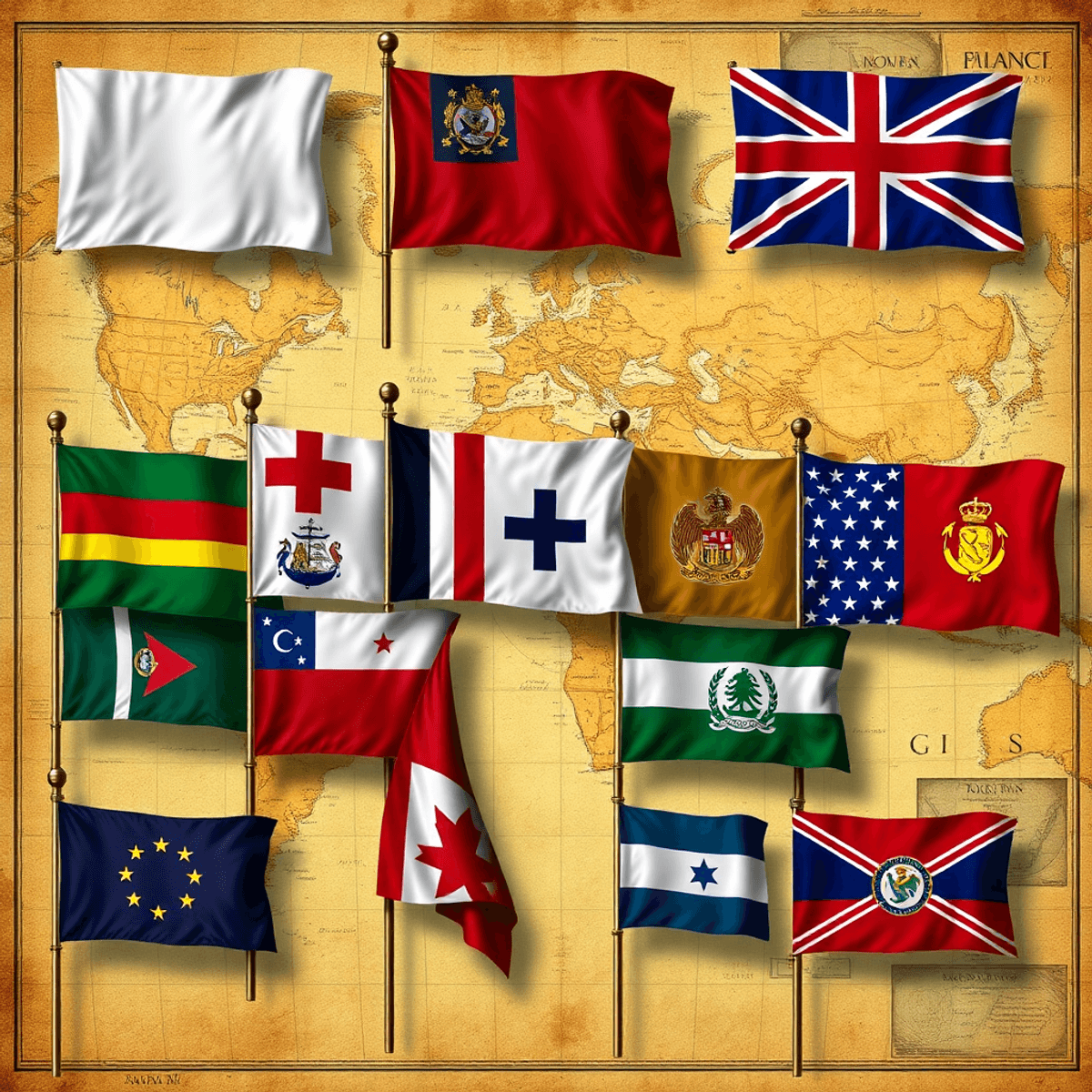
The Danish West Indies flag also illuminates lesser-known aspects of Caribbean colonial transitions. While British, French, and Spanish colonial symbols often dominate historical discussions, Denmark’s colonial banner reminds us of the region’s diverse colonial heritage. Its story challenges simplified narratives of Caribbean colonialism, revealing how smaller European powers shaped the region’s political and cultural landscape.
This historical emblem serves as a tangible link to the complex relationships between colonial powers and their Caribbean territories, highlighting the role of maritime trade, cultural exchange, and evolving political identities in shaping the modern Caribbean.
Preserving Memory Through Museums and Research
Museums around the world play a crucial role in preserving the maritime heritage of the Danish West Indies. They house important collections that tell the story of this historical period.
Museums Preserving Danish West Indies History
Here are some museums that focus on preserving the history of the Danish West Indies:
- The National Museum of Denmark: This museum has a permanent exhibition dedicated to Danish colonial history. It showcases replicas of flags and maritime artifacts.
- Estate Whim Museum in St. Croix: This museum is committed to preserving original documents and objects from the Danish colonial era.
- The Danish West Indian Society: This organization maintains an archive of historical records and conducts research on colonial-era symbols.
Ongoing Research Initiatives
Research initiatives are actively working to uncover new insights about these historical flags. Here are some examples:
- The Danish National Archives digitization project has made thousands of colonial documents accessible to scholars worldwide.
- Maritime historians study ship logs and customs records to understand how various flag designs were used during different periods.
- Local heritage organizations in the U.S. Virgin Islands are documenting oral histories from descendants of Danish colonial inhabitants. These accounts provide valuable context about how the flag was perceived by different segments of colonial society.
- Recent academic partnerships between Danish and Caribbean universities have launched collaborative studies examining the role of colonial symbols in shaping cultural identity, such as those exploring the impact of these symbols on cultural identity.
These projects combine traditional archival research with modern digital preservation techniques to ensure this chapter of Caribbean history remains accessible for future generations.
Conclusion
The Danish West Indies flag is a powerful reminder of the Caribbean’s complex colonial past. Its blue field and Dannebrog canton tell a story of maritime power, cultural identity, and the shifting tides of colonial rule. Understanding these historical symbols helps us grasp the deeper connections between European nations and their Caribbean territories.
The change from Danish West Indies to U.S. Virgin Islands was a crucial moment in Caribbean history – one that altered not only political boundaries but also the symbols representing these island communities. The flags that flew over these territories reflect the hopes, struggles, and identities of the people who lived under their influence.
We invite readers to:
- Explore local museums and archives housing Danish West Indies artifacts
- Research their own community’s historical flags and symbols
- Share discoveries about forgotten colonial banners
- Connect with historical societies dedicated to preserving Caribbean heritage
These forgotten banners serve as windows into our shared past, teaching us valuable lessons about identity, sovereignty, and the ever-changing nature of national symbols.