On May 28, 1588, the sun rises over Lisbon’s harbor. The Spanish Armada, the largest naval fleet Europe has ever seen, sets sail with its grand banners unfurled. This marks the beginning of its historic mission against Protestant England. These flags were not just pieces of fabric waving in the wind; they represented Spain’s power at sea and its unwavering religious beliefs.
The flags of the Armada silently proclaimed Spain’s twofold purpose: to conquer militarily and restore Catholicism. Each banner featured intricate designs that combined royal symbols with religious imagery, making a bold statement about Spanish strength. But what truly set these naval flags apart? Their significance went beyond simply identifying ships.
What psychological impact could a flag have?
Imagine yourself on an English ship, observing as these enormous Spanish galleons draw near. Their flags prominently display crosses, images of saints, and royal emblems – a deliberate exhibition of divine power and military force intended to instill fear in Protestant hearts.
This article explores the captivating realm of the Spanish Armada’s maritime flags:
- The strategic design elements that proclaimed Spanish authority
- Hidden meanings within Catholic symbols and imagery
- Psychological tactics woven into every banner
- Their enduring influence on the history of naval flags
By examining ancient records and historical accounts, we will uncover how these banners became instruments of intimidation during one of history’s most significant naval confrontations.
Historical Context of the Spanish Armada
King Philip II of Spain launched the Spanish Armada in 1588 amid escalating tensions between Catholic Spain and Protestant England. The religious divide across Europe had created deep political rifts, with Spain positioning itself as the defender of Catholicism. Philip II’s motivations were both religious and political – he had once been King Consort of England through his marriage to Mary I, and saw Protestant Queen Elizabeth I’s rule as illegitimate.
Challenges Faced by the Spanish Empire
The Spanish Empire was facing several threats to its power:
- English privateers regularly attacked Spanish treasure ships
- Protestant Dutch rebels were challenging Spanish control in the Netherlands
- Elizabeth I’s support of Protestant causes weakened Spanish influence
The Ambitious Plan of the Armada
The Armada was Spain’s most ambitious naval undertaking, bringing together:
- 130 ships of different sizes
- 8,000 sailors
- 18,000 soldiers
- 2,500 guns
Maritime symbols played a crucial role in projecting Spanish power across this vast fleet. Each ship displayed carefully chosen flags and standards that proclaimed Spain’s imperial authority. The vessels themselves became floating emblems of Catholic might, with their towering structures adorned in religious imagery and royal heraldry.
The Organization of the Fleet
The fleet’s organization reflected Spanish naval tradition, with specialized vessels serving distinct roles:
- Galleons – heavy warships forming the fleet’s backbone
- Galleasses – hybrid rowing-sailing vessels
- Hulks – supply ships carrying provisions
- Zabras – fast scout ships for reconnaissance
These ships, united under common symbols of Spanish authority, represented the largest naval force Europe had seen – a floating city dedicated to restoring Catholic rule over Protestant lands.
Design Elements of the Spanish Armada Flag
The Spanish Armada’s flagship banners displayed intricate designs that merged royal authority with divine symbolism. At the center of these naval ensigns stood the prominent Habsburg eagle, its wings spread majestically across a rich crimson background. This imperial emblem carried dual shields representing the united kingdoms of Castile and Aragon.
Distinctive Visual Elements
The flags incorporated distinctive visual elements:
- A prominent Latin cross dominated the upper quarter, crafted in brilliant gold thread
- The Royal Arms of Spain featured lions, castles, and the Chain of Burgundy
- Sacred imagery including the Virgin Mary and various patron saints
- Elaborate border patterns woven with religious motifs and royal insignias

Symbolic Color Scheme
The color scheme carried deep symbolic meaning:
- Crimson red – symbolized martyrdom and the blood of Christ
- Royal gold – represented divine favor and celestial authority
- Imperial purple – denoted royal sovereignty and power
- Navy blue – signified maritime dominion
These design choices set Spanish naval flags apart from their European counterparts. While English ships flew simpler banners with the Cross of St. George, and Dutch vessels displayed horizontal tricolors, the Spanish Armada’s flags exhibited complex heraldic artistry. The French naval ensigns of the period featured fleurs-de-lis on white backgrounds, lacking the intricate religious symbolism characteristic of Spanish maritime flags.
The artistic complexity and size of these banners—some measuring over 30 feet in length—created an imposing sight on the horizon, serving both as identification markers and statements of Spain’s naval supremacy.
Catholic Symbolism in Naval Flags
The naval flags used by the Spanish Armada were more than just markers of identity; they were powerful symbols of faith. These banners carried deep Catholic meanings into battle, making them both a rallying point for Spanish troops and a psychological weapon against their enemies.
Key Symbols on the Spanish Armada’s Flags
The flags of the Spanish Armada featured various religious images that conveyed important messages:
- Sacred Heart of Jesus: Often placed at the center of many banners, representing divine protection.
- Virgin Mary’s Image: Usually shown as Stella Maris (Star of the Sea), the traditional protector of sailors.
- Saints’ Portraits: Including St. James the Moorslayer, Spain’s patron saint.
- Latin Inscriptions: Religious phrases and biblical quotations bordered the flags’ edges.
Artifacts Revealing Spain’s Maritime Catholicism
The Museo Naval de Madrid houses several preserved fragments showing the Cruz de Borgoña (Burgundy Cross) intertwined with images of patron saints. These artifacts reveal intricate needlework depicting angels holding chalices and sacred vessels.
Spain’s role as Defensor Fidei (Defender of the Faith) manifested through these maritime symbols. Each banner proclaimed Spain’s divine mandate to protect Catholicism across the seas. The British Museum’s collection includes contemporary sketches showing Spanish galleons bearing massive flags with the IHS monogram – the holy name of Jesus – surrounded by golden rays.
The Impact of Religious Emblems on Warfare
These religious emblems transformed naval warfare into a spiritual crusade. Spanish sailors viewed their mission through the lens of these sacred symbols, while Protestant adversaries faced not just military might but also the full visual power of Counter-Reformation iconography.
Primary sources from that time describe English sailors’ accounts of the “forest of crosses” advancing across the Channel, creating an imposing spectacle of Catholic maritime power.
Psychological Warfare Through Flags During Naval Battles
The flags used by the Spanish Armada were more than just symbols; they were powerful tools of psychological warfare. These flags, with their imposing religious imagery, were designed to strike fear into the hearts of Protestant enemies.
The Terrifying Sight of Approaching Spanish Vessels
Historical accounts from English sailors describe the “terrifying sight” of approaching Spanish ships. These vessels, with their towering banners displaying Catholic symbols of divine authority, created an atmosphere of dread among Protestant forces.
“The Spanish ships bore down upon us, their great standards raised high, adorned with crosses and saints that seemed to mock our Protestant faith” – English Captain’s Log, 1588
Amplifying Fear through Strategic Flag Placement
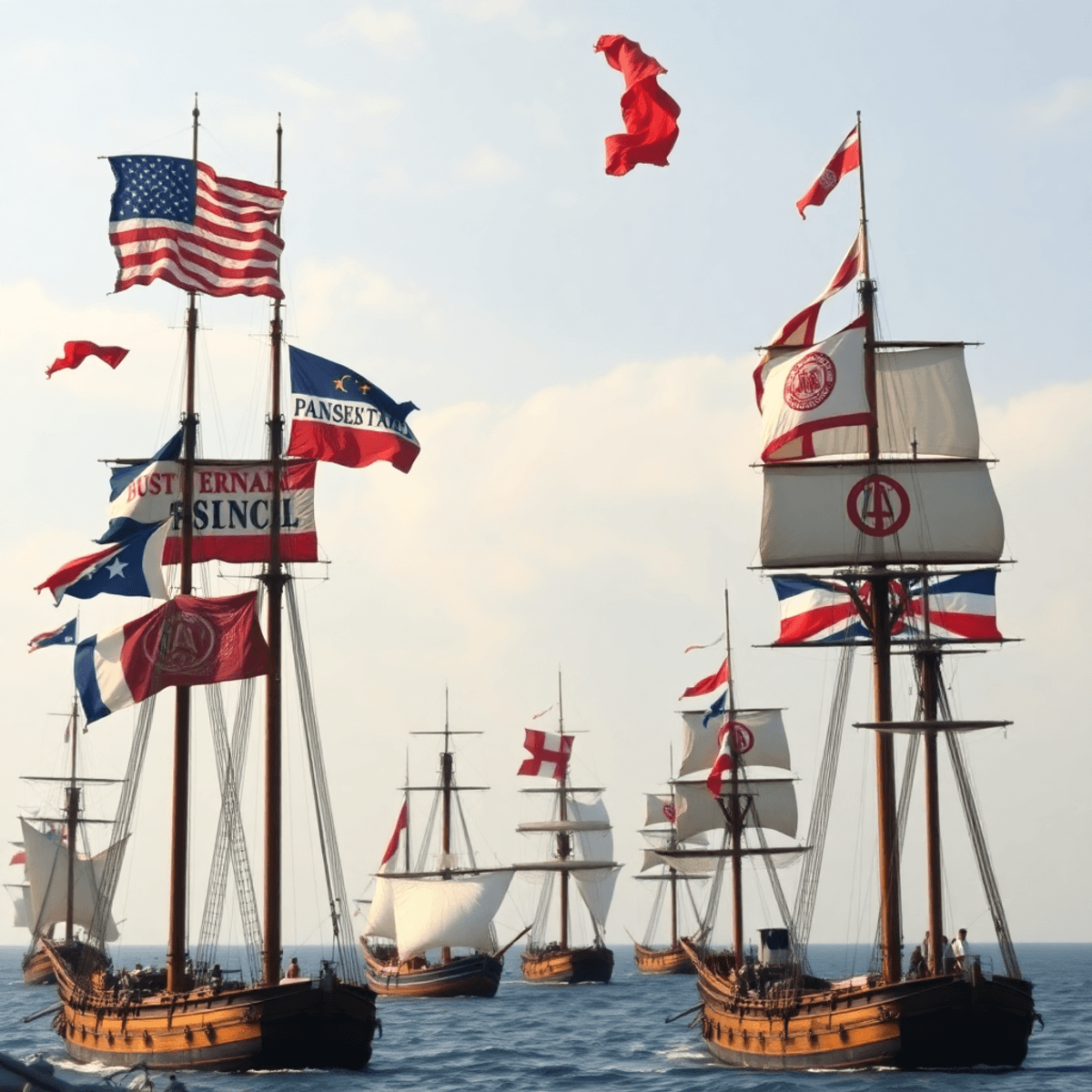
The strategic placement of flags across the Armada’s vessels further intensified their psychological impact. Larger ships displayed multiple banners at different heights, creating an overwhelming visual presence that could be seen from miles away. This display of religious and royal power aimed to demoralize enemy crews before combat even began.
Divine Protection for Spanish Sailors
While the flags instilled fear in Protestant enemies, they also served as a source of strength for Spanish sailors. These symbols represented divine protection in battle, reinforcing the belief in Spain’s holy mission.
Records from the Museo Naval de Madrid document how crews would pray beneath these banners before engaging in combat, seeking spiritual support and affirmation of their cause.
Flags as Symbols of Power Throughout History
Interestingly, this use of flags as psychological tools was not unique to the Spanish Armada. Various trading companies throughout history have also employed flags to symbolize their power and influence across global empires.
For instance, trading company flags have played a significant role in shaping global history by representing colonial empires and asserting dominance in trade.
Visual Elements Shaping Combat Outcomes
The psychological tactics employed by the Spanish Armada extended beyond religious intimidation:
- Size and Scale: Oversized flags demonstrated Spanish naval might
- Color Psychology: Bold reds signaled aggression and bloodshed
- Height Positioning: Elevated banners created an impression of dominance
- Multiple Displays: Coordinated flag arrangements suggested unity and power
These visual elements combined to create a complex psychological battlefield where flags played a crucial role in shaping combat outcomes through fear and intimidation.
Legacy and Influence on Maritime Flag History
The flag designs of the Spanish Armada had a lasting impact on the study of maritime flags (vexillology), influencing naval flags for many years to come. Spanish naval ships continued to use the distinctive cross designs and religious symbols well into the 18th century, while other European navies began adopting the practice of using large, eye-catching flags.
Key Developments Influenced by Spanish Armada Flags
Several important developments in maritime flag history can be traced back to the influence of Spanish Armada flags:
- The Spanish Naval Jack maintained the burgundy cross from the Armada era until 1785
- Portuguese naval ensigns adopted similar religious imagery and proportions
- The British Royal Navy standardized larger battle ensigns to match the impressive scale of Spanish flags
Religious symbolism in maritime flags underwent significant transformation after the Anglo-Spanish War. While Catholic imagery became less prominent, there was an increase in the use of national symbols and heraldic devices. This change reflected shifting political dynamics and the rise of nation-states.
Research from the Journal of Maritime History highlights how the flag traditions of the Armada influenced various aspects of flag design:
- Flag sizing and visibility standards
- Color combinations for maximum impact
- Placement of emblems and symbols
- Integration of national identity markers
Modern Preservation Efforts
Efforts to preserve these historical designs continue today. The Museo Naval de Madrid houses original flag fragments, while institutions like the National Maritime Museum in Greenwich maintain detailed records of the Armada’s vexillological legacy. Digital archives now allow scholars and enthusiasts to study these influential designs, ensuring their ongoing significance in maritime historical research.
Exploring further into this subject reveals a wealth of knowledge about colonial and maritime flags that vanished with empires, which marks a significant part of our shared history. Additionally, understanding the evolution of flag design can provide valuable insights into the principles of vexillology and the symbolism behind lost banners.
Conclusion: The Enduring Symbolism of the Spanish Armada Flag
The Spanish Armada’s flags are more than just military banners – they are powerful artifacts that represent a unique blend of religious devotion, political ambition, and psychological warfare in maritime history. The intricate combination of Catholic imagery and naval symbolism created a visual language that conveyed Spain’s identity and aspirations during the 16th century.
These flags had a significant psychological impact on naval warfare, demonstrating how visual symbols can influence battles. Today, military strategists and historians study these banners to understand the role of psychological warfare in naval conflicts. Their influence goes beyond the military, providing insights into how societies use symbols to project power and assert cultural identity.
The Spanish Armada’s flags offer a glimpse into a crucial period when religion, politics, and naval warfare intersected. They remind us that flags are not just pieces of fabric – they represent the hopes, fears, and beliefs of the civilizations that create them.
To fully appreciate these maritime ensigns, one might consider exploring how to read a flag, decoding their colors, shapes, and symbols to reveal rich cultural and historical stories. The study of these naval ensigns deepens our understanding of how visual symbolism influences human conflict and cultural expression. Their legacy lives on in museums, historical records, and the ongoing tradition of designing maritime flags.
Suggested External Links for Further Reading
- The Spanish Armada: A Naval History – Royal Museums Greenwich comprehensive guide to the Armada campaign
- Maritime Flags and Religious Symbolism – Academic paper exploring the intersection of faith and naval heraldry
- Spanish Naval Museum Collections – Digital archive featuring original Armada flag designs and artifacts
- Tudor Naval Warfare – The Tudor Society’s detailed analysis of 16th-century naval combat tactics
- [Religious Art in Maritime History](https://www.vam.ac.uk) – Victoria and Albert Museum’s collection of naval religious imagery
- [Psychological Warfare in Naval History](https://www.navyhistory.org) – Naval Historical Foundation’s research on historical battle tactics
- Flag Institute Database – Comprehensive repository of historical maritime flags and their meanings
- Maritime Museums of Spain – Network of Spanish maritime museums with Armada-era exhibits
These resources provide deeper insights into the Spanish Armada’s naval banners, religious symbolism in maritime warfare, and the psychological aspects of naval combat during the Anglo-Spanish War. Each link offers unique perspectives from respected institutions and scholars in maritime history.