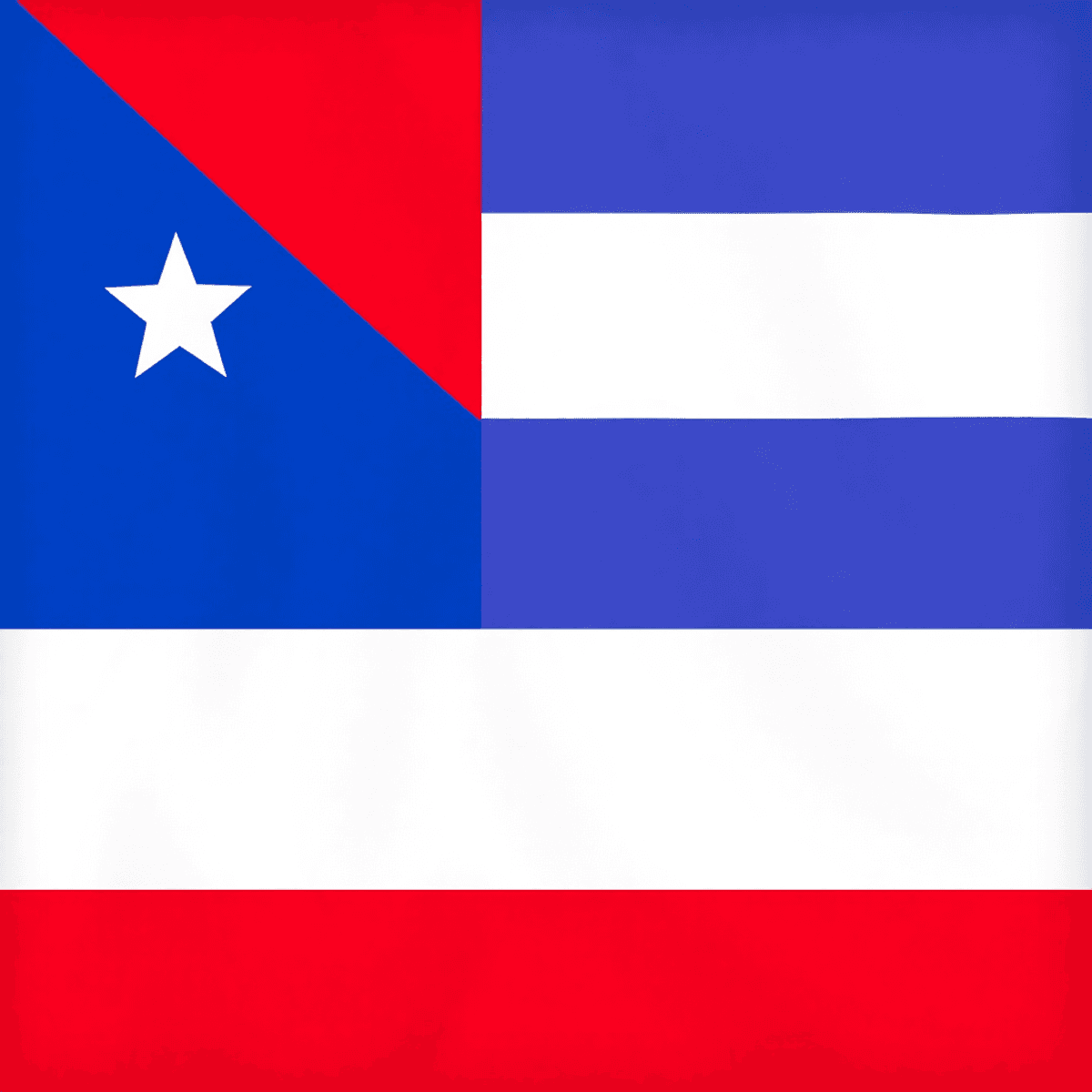
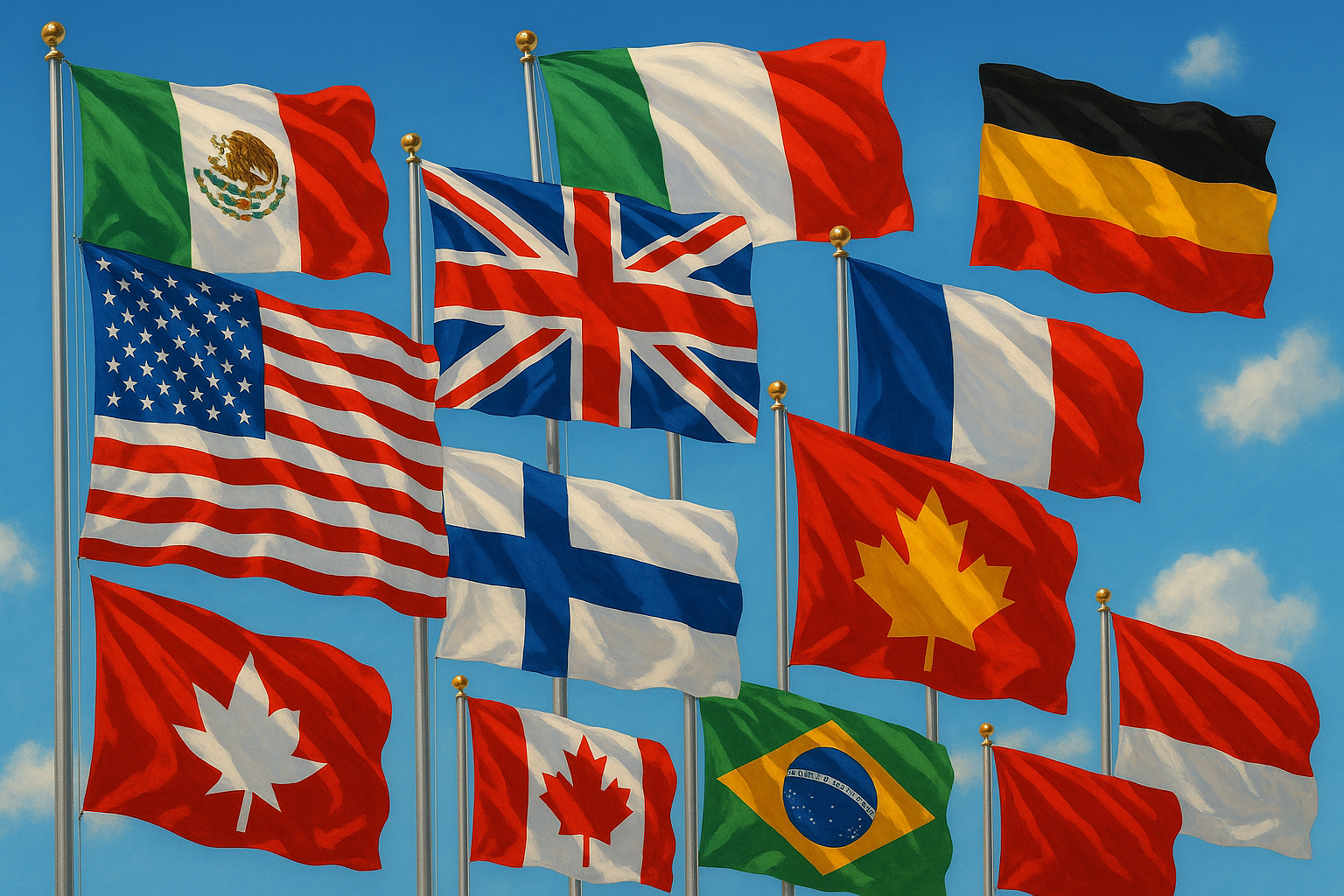
Red white blue flag meaning runs deeper than a simple color scheme—it’s a global language of identity, sacrifice, and shared values. Picture a massive crowd gathered under the morning sky, eyes lifted as a flag unfurls in the wind. This powerful moment, repeated across continents and centuries, has sparked revolutions, unified people, and symbolized ideals worth defending.
But what makes these flags so powerful? The answer lies in their colors – specifically the bold combination of red, white, and blue that can be found on the flags of more than 30 countries around the world.
These three colors represent a wide range of shared human values:
- Red symbolizes the passion for change and selflessness
- White represents the aspirations for harmony and innocence
- Blue embodies the ideals of fairness and independence
While red, white, and blue appear in many national flags, each country assigns its own rich meanings to these colors. In the United States, red stands for bravery and valor; in France, it honors the blood shed during the French Revolution. Britain’s Union Jack uses blue to evoke its maritime power and royal lineage, while Russia’s interpretation ties back to traditional Slavic symbolism. Understanding the red white blue flag meaning requires exploring these unique national stories and how they reflect the values, histories, and struggles of different peoples.
Flags Beyond National Identity
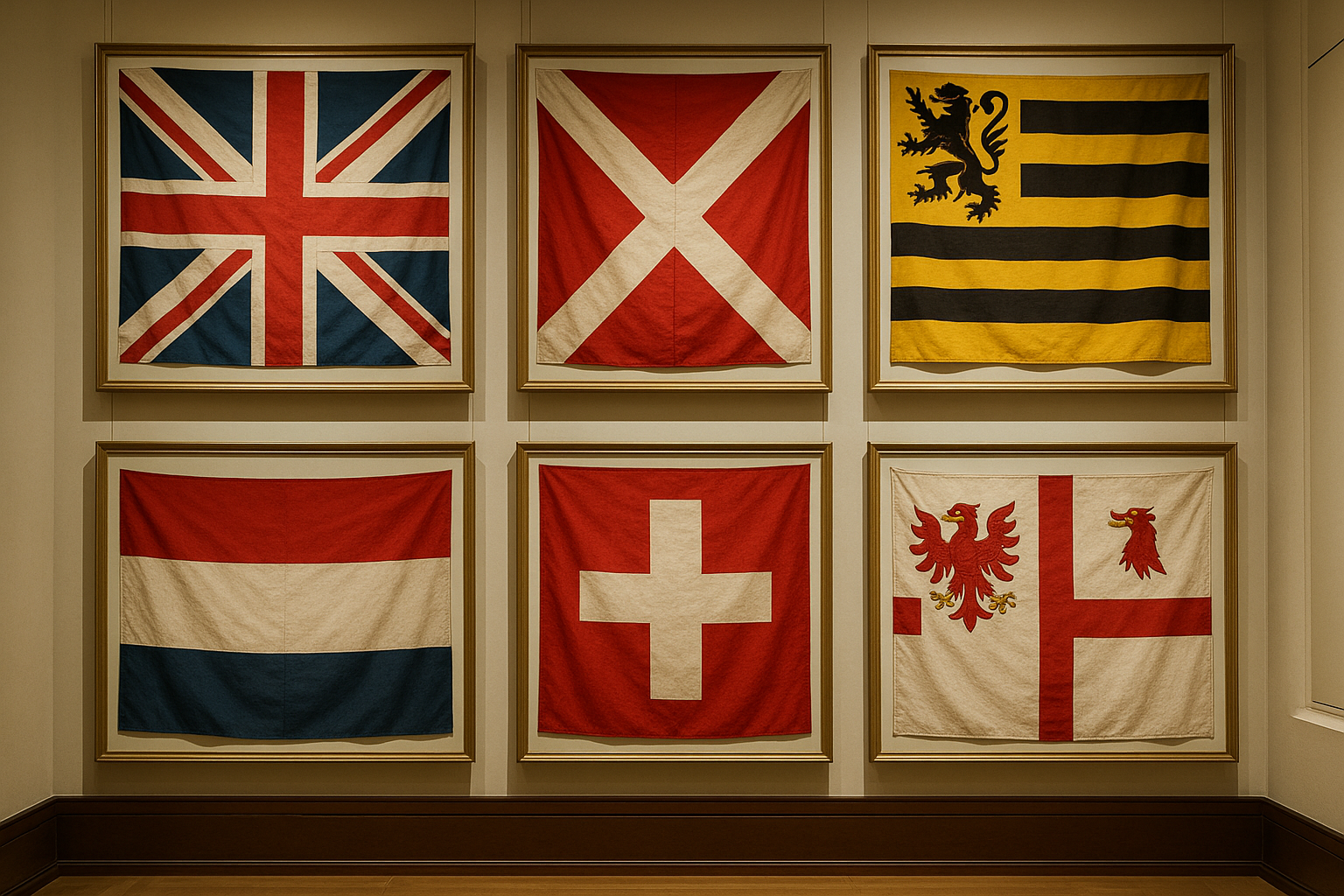
Flags aren’t just about representing countries; they also tell stories about trading companies and their forgotten flags. These flags once symbolized global empires, commerce, and power throughout history.
Understanding these multiple layers of meaning helps us comprehend how flags evolve from being simple pieces of cloth into potent symbols of national identity. They become revered icons that bring millions together under shared values while still honoring individual cultural narratives that differentiate each nation.
Decoding Flags: Colors, Shapes, and Symbols
To fully appreciate the significance behind flags, we must delve into how to interpret a flag. By examining their colors, shapes, and symbols closely, we can uncover rich cultural and historical tales woven within them.
Remembering Lost Indigenous Flags
It’s equally important to acknowledge the existence of forgotten indigenous flags. These flags once held sacred meanings with deep cultural and spiritual importance but have been erased over time.
Theocratic Symbols: Where Spirituality Meets Nationalism
In certain situations, flags also function as theocratic symbols. Here, spiritual authority intertwines with national identity, conveying divine power alongside political rule.
Unraveling Colonial and Maritime Histories
Lastly, studying colonial and maritime flags sheds light on the history behind vanished empire banners that marked trade routes or conquests.

The Historical Roots of Red, White, and Blue in Flag Culture
The tradition of red, white, and blue in flags traces back to medieval European heraldry. These colors held deep significance in the coats of arms of noble families, with red symbolizing strength, white representing faith, and blue denoting loyalty to the crown.
The Dutch Republic’s flag, created in 1572, marks one of the earliest national uses of this iconic color combination. The horizontal tricolor design sparked a revolution in flag aesthetics, inspiring numerous nations to adopt similar patterns.
Two pivotal moments cemented these colors in global flag culture:
The American Revolution (1765-1783)
- The Continental Congress adopted the Stars and Stripes in 1777
- Colors drawn from British heritage but reinterpreted for independence
- Design influenced by George Washington’s family coat of arms
The French Revolution (1789-1799)
- Merged the colors of Paris (red and blue) with royal white
- Created during the upheaval of 1789
- Design spread across Europe through Napoleonic campaigns
By the 19th century, red, white, and blue had become synonymous with revolutionary ideals and independence movements. Nations from Latin America to Eastern Europe incorporated these colors into their flags, each adding unique cultural interpretations to the traditional meanings.
The British Union Jack’s influence through colonial expansion spread these colors across the globe, leading to their adoption in numerous Commonwealth nations’ flags, including Australia and New Zealand. However, it’s interesting to note that not all flags retain their significance over time. Some become forgotten, lost to revolutions or political changes.
Additionally, the history of flags is also rich with stories of rebellion and resistance. Many rebel flags have emerged throughout history as symbols of defiance during various uprisings.
Symbolism of Red in Flags Around the World
Red blazes across national flags as one of the most potent and dynamic colors in vexillology. This bold hue carries deep psychological impact, triggering emotional responses of energy, passion, and intensity in viewers. The psychology of color red reveals its significance extends beyond mere aesthetics, influencing perceptions and feelings.
Red in National Flags
In the United States flag, red stripes symbolize valor and bravery, commemorating the blood shed by patriots during the American Revolution. The French tricolor employs red to represent the people’s courage during their revolutionary struggle for liberty.
Red’s Symbolic Power Beyond Western Nations
Red’s symbolic power extends far beyond Western nations:
- Traditional Meanings
- China: Happiness, good fortune, celebration
- Japan: Sun’s power, divine heritage
- Turkey: Blood of martyrs, sacrifice for nation
- Revolutionary Symbolism
- Soviet Union: Workers’ struggle
- Vietnam: Revolutionary victory
- Cuba: Blood of freedom fighters
Research published in the Journal of Applied Social Psychology reveals red’s universal association with dominance and power across cultures. This psychological impact explains red’s prevalence in national flags, where it serves as a rallying point for patriotic sentiment.
The shade of red chosen often carries specific cultural significance. While communist nations historically favored bright scarlet to represent revolution, many monarchies use deeper crimson tones to convey nobility and historical legitimacy.
The color’s meaning transforms through cultural lenses – from representing imperial might in ancient Rome to symbolizing communist ideology in the 20th century. These shifting interpretations demonstrate red’s remarkable adaptability as a symbol of national identity.
Flags Beyond Nations
However, the exploration of flags doesn’t stop at national boundaries. The concept of flags extends into realms of imagination and fiction as well. For instance, mythical flags have been imagined for lost civilizations such as Atlantis and Hyperborea. These flags symbolize not just territorial claims but also embody the rich tapestry of ancient myths.
Similarly, fictional country flags serve as emblems of creativity and culture, representing imagined identities that resonate with people’s aspirations or fears.
Moreover, history is replete with instances of forgotten country flags, each carrying hidden stories about lost nations and political changes.
Even in the darker chapters of history, symbols like pirate flags have played significant roles. These flags were not mere pieces of fabric; they struck fear across the high seas and represented power and terror in maritime history.
Thus, whether it’s a national flag drenched in red or a mythical flag fluttering in our imaginations, each flag tells a story that reflects our collective human experience.
The Meaning Behind White in National Flags
White is a common color used in national flags around the world, representing concepts such as purity, peace, and unity. Its significance goes beyond geographical boundaries and holds deep cultural meaning.
White in the United States Flag
In the flag of the United States, the white stripes symbolize innocence and purity of purpose. These values reflect the nation’s aspirations for moral clarity and righteous intentions in both domestic and international affairs. The stark contrast between white and its neighboring colors visually represents the country’s founding principles.
White’s Historical Perspective in France
France’s tricolor flag offers a unique historical perspective on the symbolism of white. The central white band originally represented the Bourbon monarchy, with the color serving as the royal standard for centuries. However, during the French Revolution, this royal connection transformed as white merged with red and blue to create a new symbol of national unity.
White as a Mediator in Ireland
Ireland’s flag showcases the role of white as a mediator between opposing forces. The central white stripe represents hope for peace between Catholic nationalists (symbolized by green) and Protestant unionists (represented by orange). This design illustrates how white has the power to bridge political and religious divides.
Functions of White in National Flags
White serves multiple purposes in national flags:
- Creating visual balance between bold colors
- Symbolizing diplomatic neutrality
- Representing peaceful intentions
- Enhancing visibility and recognition
- Providing contrast for other symbolic elements
The psychological impact of white in flag design stems from deep-rooted cultural associations with cleanliness, new beginnings, and spiritual purity. These meanings resonate across diverse societies, making white a powerful tool in national symbolism.
Blue’s Role in Conveying Justice, Vigilance, and Freedom
The color blue stands as a powerful emblem of justice, vigilance, and freedom in national flags worldwide. According to the U.S. Government Flag Code, the navy blue field in the American flag represents perseverance and justice – core values that shaped the nation’s foundation.
Blue’s historical significance traces back to medieval Europe, where it held deep connections to nobility and divine authority. In France, the royal blue shade originated from the banner of Saint Martin of Tours, later becoming associated with the city of Paris. This urban connection transformed during the French Revolution, as blue shifted from a monarchical symbol to represent the democratic aspirations of the common people.
The specific shade of blue chosen for national flags carries distinct symbolic weight:
- Navy Blue: Projects strength, authority, and steadfastness (United States, Australia)
- Royal Blue: Represents sovereignty and dignity (United Kingdom)
- Light Blue: Symbolizes peace, tranquility, and hope (United Nations)
The Netherlands flag features a bright cobalt blue, symbolizing the Dutch people’s historical relationship with the sea and their vigilant protection of maritime freedoms. Similarly, Luxembourg’s lighter sky-blue stripe reflects the nation’s commitment to maintaining peace and stability in Europe.
Modern interpretations of blue in flags emphasize democratic values and international cooperation. The European Union flag’s azure field represents unity and harmony among member states, while the United Nations’ light blue embodies global peacekeeping efforts.
For a deeper understanding of how these colors and designs have evolved over time, including their symbolism and history, explore this guide on lost banners, which provides valuable insights into vexillology principles.
Comparative Analysis: Red, White, and Blue Flags Around the World
The combination of red, white, and blue colors in flags represents various national identities worldwide. Each country has its own interpretation of these colors based on its unique history.
United Kingdom’s Union Jack
The flag of the United Kingdom, known as the Union Jack, uses red, white, and blue to symbolize the different nations within its territory. The red cross of St. George stands for England, while the white and blue saltire represents Scotland’s St. Andrew’s Cross. This design reflects centuries of political union and monarchy.
The Netherlands’ Tricolor Flag
One of the oldest tricolor flags belongs to the Netherlands, dating back to the 16th century. During their fight for independence from Spain, they adopted horizontal stripes inspired by the coat of arms of the House of Orange. The Dutch flag has influenced several other countries’ flag designs, including that of Russia.
Variations in Symbolism
Different nations have assigned their own meanings to the colors red, white, and blue in their flags:
- Costa Rica: Blue represents the sky and opportunities
- Australia: Red recalls British heritage
- Thailand: Red symbolizes the blood of life
- Russia: White signifies nobility and honesty
Political Influence on Flag Meanings
The significance behind each flag was greatly shaped by the political atmosphere at the time it was adopted. For example:
- The tricolor flag of revolutionary France became a powerful symbol of democracy, inspiring countries fighting against colonial rule.
- The design of the American flag evolved as new states joined the union, reflecting territorial expansion and political development.
Visual Connections and Cultural Narratives
While these flags share common colors that create visual links between nations, they also tell distinct cultural stories. The specific placement, shade, and proportion of each color add depth to their meanings – such as Thailand’s use of horizontal stripes or Nepal’s unique pennant shape.

The Psychological Impact of Patriotic Flag Colors on National Identity
Research by the American Psychological Association reveals that flag colors trigger deep emotional responses linked to national identity. The combination of red, white, and blue creates powerful psychological anchors that shape collective memory and patriotic sentiment.
How Flag Colors Affect Us
Studies show these colors activate specific psychological responses:
- Red stimulates excitement and passion, raising energy levels during national celebrations
- White creates a sense of mental clarity and unity, helping citizens feel connected
- Blue induces feelings of trust and stability, reinforcing social bonds
These effects can be further understood through the lens of cross-cultural psychology, which explores how different cultures interpret and react to colors.
Flags as Symbols During Crisis
The psychological power of these colors becomes particularly evident during times of national crisis. After the September 11 attacks, Americans displayed flags en masse – the familiar red, white, and blue served as a visual comfort blanket, helping citizens process trauma through shared symbolic meaning.
Global Solidarity Through Flag Colors
Similar patterns emerge across nations using these colors. During the 2015 Paris attacks, the French tricolor became a global symbol of solidarity. Citizens worldwide adopted the blue, white, and red in social media profiles, demonstrating how flag colors transcend borders to create emotional resonance.
Celebrating Victories with Flags
The psychological impact extends to celebration contexts. Olympic victories often trigger spontaneous flag-waving, with the colors acting as a visual catalyst for collective joy. These shared emotional experiences strengthen national bonds through color association, creating lasting psychological imprints that reinforce patriotic identity.
Unconscious Influence of Flag Colors
Research indicates exposure to patriotic flag colors can unconsciously influence behavior, increasing feelings of national belonging and social cooperation. This psychological phenomenon helps explain why nations invest significant meaning in protecting and displaying their flag colors during both challenging times and moments of triumph. The American Psychological Association has conducted extensive research into these areas, revealing fascinating insights into our relationship with flag colors.
The Connection Between Politics and Culture in Flag Color Symbolism
Political movements shape and reshape the meaning of flag colors through revolutionary changes, social upheaval, and shifting ideologies. The Soviet Union’s adoption of a red flag transformed the color’s traditional meaning of courage into a powerful symbol of communist ideology across Eastern Europe and Asia.
The evolution of South Africa’s flag illustrates dramatic political-cultural shifts. Under apartheid, the flag featured orange, white, and blue – colors tied to Dutch colonial heritage. The post-apartheid flag now incorporates black, yellow, green, red, blue, and white to represent South Africa’s diverse population and new democratic values.
Recent social movements demonstrate flags’ adaptability:
- Pride Flag Variations – The rainbow pride flag has spawned numerous versions incorporating additional colors to represent expanding LGBTQ+ identities
- Black Lives Matter Flag – The pan-African colors of red, black, and green gained renewed significance during racial justice protests
- Environmental Movement – Green has emerged as a universal symbol for environmental causes, influencing flag designs for climate activism
Cultural interpretations of red, white, and blue continue evolving through modern lens. The American flag’s meaning shifted during the Vietnam War era, when some viewed it as representing militarism rather than freedom. In France, the tricolor’s symbolism of unity faces new questions amid debates over national identity and immigration.
These changing interpretations demonstrate how flag colors serve as living symbols, reflecting each generation’s values while maintaining historical connections.
Conclusion
National flags are more than just pieces of fabric with colors—they represent the stories and experiences of countries and their people. The combination of red, white, and blue in flags around the world showcases a fascinating blend of universal human values and unique cultural interpretations. These colors symbolize revolutions, peace, sacrifice, justice, unity, and freedom.
The true power of these symbols lies in their ability to change while still holding onto their historical significance. As societies grow and develop, so do the meanings we assign to our flags. However, they remain constant symbols of national identity and shared goals. By exploring the deeper meanings behind red, white, and blue, we can better understand the intricate stories that make up national flags—stories that continue to influence our future.
A flag is more than just a symbol of a country—it tells the story of its journey, values, and dreams.