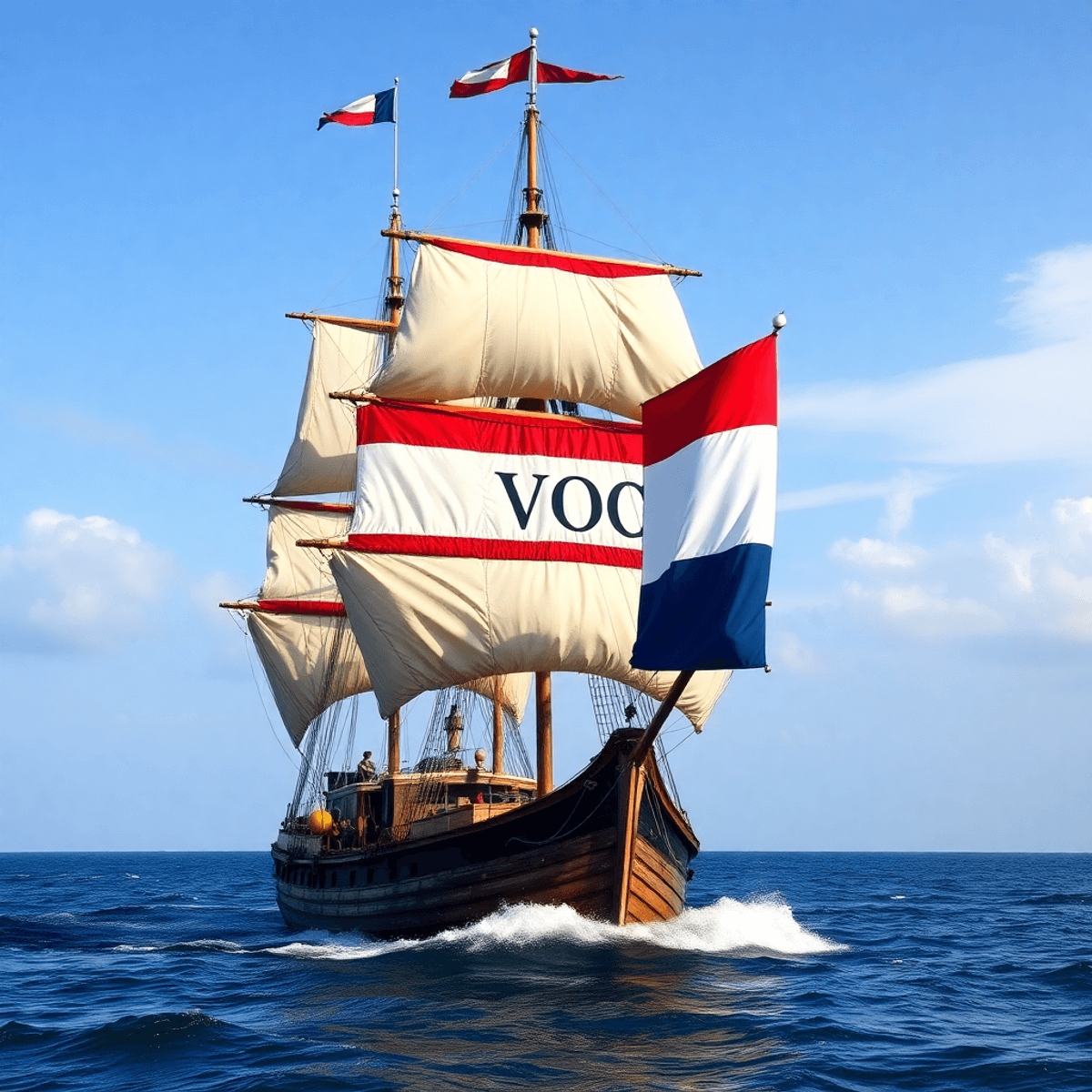
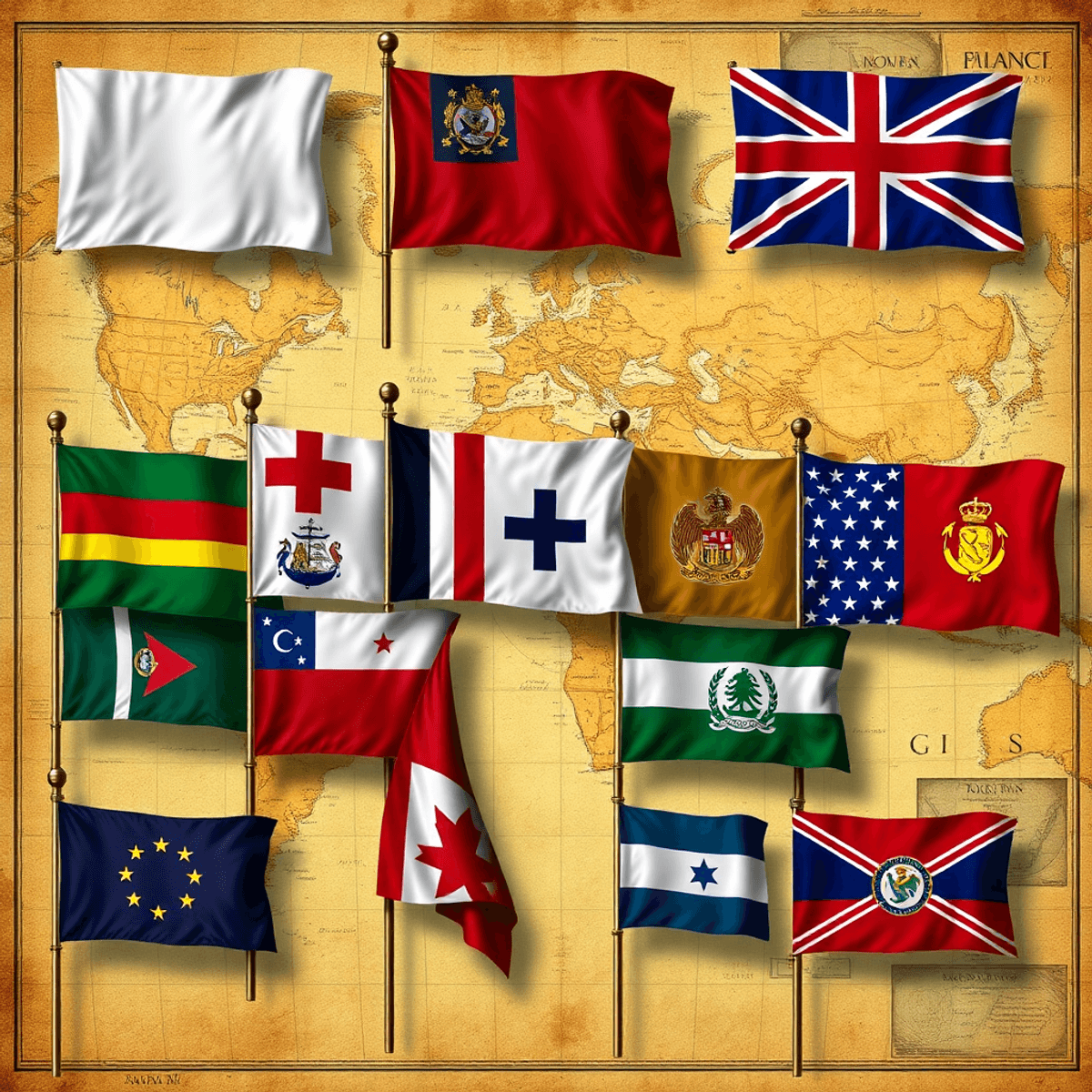
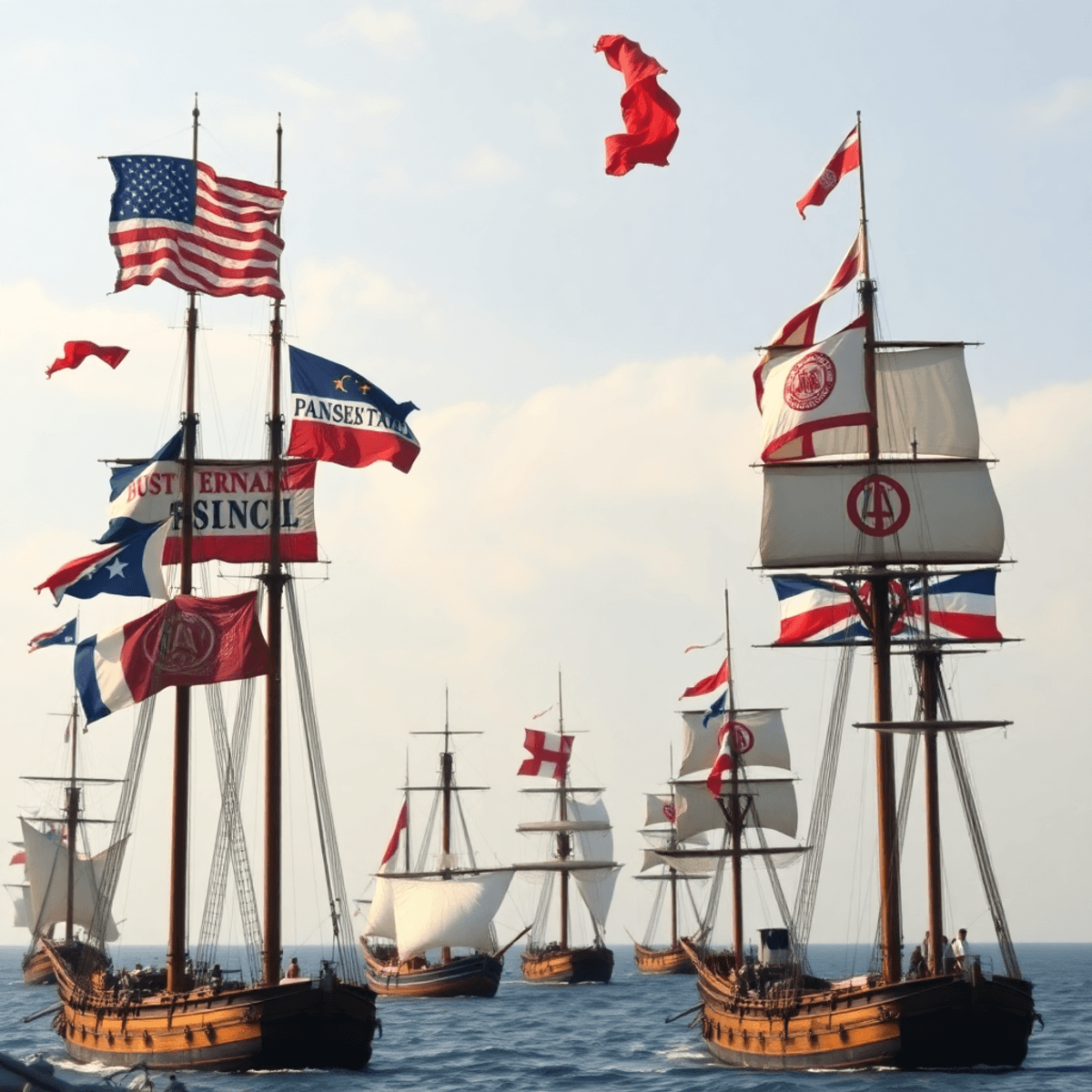
During the Age of Discovery, Portuguese Empire ships sailed across vast oceans under distinctive banners that proclaimed their imperial power. These flags, fluttering in the winds of the Atlantic and Indian Oceans, signified the presence of one of history’s largest maritime empires.
From 1415 to 1999, Portuguese naval banners flew across an empire covering nearly 5.5 million square kilometers. These flags symbolized Portugal’s presence in:
- The Americas: From Brazil’s tropical coastlines
- Africa: Stretching along both eastern and western shores
- Asia: Including Indian enclaves and Chinese territories
- Oceania: Dotting distant island outposts
The Role of Naval Banners
Naval banners served a purpose beyond simply identifying ships at sea. They represented:
- Royal authority in far-off waters
- Portugal’s dominance in maritime affairs
- Structures of colonial governance
- Religious and military orders
- Jurisdictions of trading companies
The Evolution of Portuguese Naval Flags
These flags tell the story of Portugal’s maritime empire through their changing designs, from basic crosses to intricate heraldic symbols. Each banner conveyed meaning through its colors, shapes, and emblems – reflecting the evolving nature of Portuguese power over centuries of colonial rule.
This article explores the fascinating history behind Portuguese naval flags:
- Their origins in medieval Europe
- Their transformation during the Age of Discovery
- Their adaptation across colonial territories
Through these banners, we trace Portugal’s journey from a small European kingdom to a global maritime power that influenced world history.
The Significance of Trading Companies
It’s important to note that while these naval banners were significant symbols of territorial claims and maritime supremacy, they also represented the interests of various trading companies, which played a crucial role in global trade and colonization. These companies often had their own distinct flags that symbolized their power and influence across different continents.
The Vanishing Flags
Furthermore, many of these colonial and maritime flags have disappeared along with the empires they represented. However, they still hold historical importance as reminders of an era when these flags marked trade routes and conquests around the world.
The Origins and Symbolism of Early Portuguese Naval Flags
Portugal’s maritime ambitions took flight in the early 15th century under the visionary leadership of Infante Dom Henry the Navigator. His strategic establishment of a naval school in Sagres marked the beginning of systematic Portuguese exploration, with ships sailing under distinctive banners that merged religious devotion with imperial power.
The Significance of Crosses in Early Portuguese Naval Flags
The earliest Portuguese naval flags displayed two significant crosses:
- The Cross of Aviz – A green cross with fleur-de-lis endings, symbolizing the Military Order of Aviz
- The Cross of Christ – A red cross with rectangular endings, representing the Order of Christ
These sacred emblems, preserved in collections at the Museu Nacional de Arte Antiga, carried deep religious-military significance. The Cross of Christ became particularly prominent, adorning the sails of Portuguese vessels as they ventured into unknown waters. This symbol represented divine protection and Portugal’s self-proclaimed mission to spread Christianity across the seas.
The Role of Naval Banners in Exploration and Expansion
During initial African coastal expeditions, these naval banners served as powerful unifying forces. Crews rallied under these sacred standards, viewing their voyages as both religious and imperial endeavors. The flags’ presence during ceremonies of possession—where explorers claimed new territories—reinforced Portugal’s divine right to expansion.
Archival Records and Symbolism in Early Flags
Archival records from the Torre do Tombo reveal detailed illustrations of these early flags, showing their precise designs and the careful attention paid to their religious symbolism. These banners combined Portugal’s crusading heritage with its emerging identity as a maritime power, creating distinctive symbols that would become recognized across the world’s oceans.
Evolution of Portuguese Naval Flags Through the Centuries
The late 15th century marked a significant shift in Portuguese naval banner design. The simple cross-emblazoned flags transformed into intricate displays featuring the royal coat of arms, reflecting Portugal’s growing maritime power and sophistication.

The Role of the Armillary Sphere
A pivotal addition to Portuguese naval symbolism emerged with the armillary sphere – a three-dimensional model of celestial bodies. This astronomical instrument became a powerful representation of Portugal’s mastery over global navigation and its expanding empire. The sphere appeared prominently on naval banners, paired with the national shield against white backgrounds.
Characteristics of Royal Navy Stern Flags
Royal Navy stern flags from the 17th to 19th centuries displayed distinct characteristics:
- White field designs with the coat of arms positioned near the hoist
- Red borders framing the central elements
- Gold-detailed armillary spheres
- Varying sizes of national shields based on vessel rank
Specialized Flags for Different Maritime Roles
The Portuguese naval system developed specialized flags for different maritime roles:
- Military Ensigns: Featured full royal arms with detailed crowns
- Merchant Marine: Simplified designs with basic national symbols
- Personal Royal Banners: Elaborate versions with dynastic elements
- Naval Jacks: Compact square flags for harbor identification
Practical Purposes of Flag Variations
According to research from the Naval History Department at the University of Lisbon, these flag variations served practical purposes in naval organization and colonial administration. The Portuguese Maritime Museum archives document over 50 distinct naval banner designs used throughout this period, each marking specific roles within the empire’s extensive fleet system.
Notable Flags Used by Explorers During the Age of Discovery
The legendary Portuguese explorers carried distinct naval banners that became powerful symbols of discovery and conquest. Vasco da Gama’s fleet sailed under the Cross of Christ banner during his historic 1497 voyage to India – a white flag adorned with a prominent red cross that represented both religious devotion and royal authority.
Pedro Álvares Cabral planted the Royal Standard on Brazilian shores in 1500, marking Portugal’s claim to the new territory. This flag featured the Portuguese coat of arms on a white field, symbolizing the crown’s direct authority over newly discovered lands.
The Order of Christ’s flag held special significance during these expeditions:
- Red cross on white field
- Used by military-religious orders
- Blessed by the Catholic Church
- Seen as divine protection for voyages
Bartolomeu Dias flew a distinctive banner during his rounding of the Cape of Good Hope in 1488. His ships displayed flags combining the Cross of the Order of Christ with personal heraldic elements granted by King John II.
These banners served as physical manifestations of Portuguese sovereignty during first contacts:
- Raised during formal possession ceremonies
- Displayed during diplomatic meetings with local rulers
- Used to mark territorial boundaries
- Positioned prominently on ships to identify Portuguese vessels
The UNESCO World Heritage site of the Torre do Tombo in Lisbon preserves detailed records of these historic flags, including original drawings and descriptions from the navigators’ own accounts.
The Spread and Adaptation of Naval Flags Across Continents in Portuguese Colonies
The naval flags of the Portuguese Empire spread across four continents, each adapting to local governance while still keeping the main Portuguese symbols:
Key Colonial Holdings and Their Naval Flags:
- Brazil (South America): Used white ensigns with the royal arms, later incorporating the distinctive green diamond pattern
- African Coastal Forts: Displayed specialized fortress flags combining Portuguese crosses with regional symbols
- Indian Enclaves: Adopted unique Estado da Índia banners featuring red crosses on white fields
- Macau (China): Utilized modified Portuguese naval flags with Chinese-influenced designs
- Oceanic Islands: Each territory flew individualized versions of the Portuguese naval ensign
Colonial governors had the authority to display unique personal standards on ships, distinguishing them from merchant vessels. These flags prominently featured intricate coat of arms designs set against white backgrounds, often incorporating symbols specific to their jurisdiction.
Trade companies also created their own maritime flags. The Portuguese India Company sailed under a white ensign adorned with the Cross of Christ, while Brazilian merchant vessels showcased modified versions of the royal banner with regional markings.
The legacy of these colonial naval flags can be seen in various maritime traditions. For instance, Brazil’s first independent naval ensign retained the Portuguese white field and armillary sphere motif. Goa’s maritime flag continued to bear elements of the Portuguese cross design until 1961. Even today, the Macau SAR flag subtly references its Portuguese naval heritage.
Many original colonial naval flags are preserved in collections at the Torre do Tombo National Archive and the Maritime Museum of Lisbon. Additionally, modified ensigns from the colonial period can be found at the Brazilian Naval Cultural Center.
The Evolution of Portugal’s National Flag: A Reflection of Imperial Maritime Power
Portugal’s national flag has gone through significant changes that reflect the growth of its maritime empire. One key symbol that emerged during this time is the armillary sphere, which was introduced during the reign of King Manuel I (1495-1521). This symbol represents Portugal’s expertise in celestial navigation and its ability to explore and dominate distant lands.
The Early Flag Design
The royal flag used in 1495 featured a prominent white background with the Portuguese shield and armillary sphere depicted in gold. This design not only asserted the authority of the monarchy but also showcased Portugal’s prowess as a seafaring nation. It created a visual identity that distinguished Portuguese ships from those of other European powers on the open sea.
Variations in Naval Flags
As naval power evolved, so did the flags flown by different types of vessels:
- Military ships displayed red-backed versions of the flag with their coat of arms prominently featured.
- Merchant vessels opted for white backgrounds with offset shields, indicating their commercial activities.
- Royal yachts had unique banners that incorporated additional heraldic elements, signifying their connection to the monarchy.
The Impact of Portuguese Independence
In 1640, Portugal regained its independence from Spanish rule, leading to further modifications in flag design. Key changes included:
- Enhanced details in the armillary sphere
- Adjustments in the positioning of the shield
- Stronger symbolic ties to maritime accomplishments
These updates aimed to reinforce national pride and assert Portugal’s status as a maritime power.
Standardization and Distinction in the 19th Century
During the 19th century, naval flags underwent standardization in terms of proportions and color specifications. This ensured consistency across different ships while still retaining core elements of the national design. Additionally, military vessels adopted distinctive pennants to differentiate themselves from merchant shipping activities.
Understanding Flag Design through Vexillology
The evolution of Portugal’s naval flags also aligns with broader trends in vexillology, which is the study of flags. This field examines the symbolism, history, and principles behind flag design, providing valuable insights into how these banners communicate messages about power and identity.
The Dual Purpose of Naval Banners
The flags flown by Portuguese ships served two important functions:
- Marking Portuguese territory across oceans
- Signaling technological advancements in navigation
By displaying intricate designs that combined land-based symbols with maritime motifs, these flags created a cohesive visual system representing Portugal’s naval dominance from the Atlantic Ocean to the Indian Ocean.
Through its evolving national flag, Portugal conveyed not only its imperial ambitions but also its mastery over seafaring exploration—a legacy that continues to shape its maritime identity today.
Legacy and Historical Significance of Portuguese Naval Flags Today
Portuguese naval flags are more than just pieces of fabric; they represent centuries of exploration, cultural exchange, and colonial influence. Today, these historic banners can be found in renowned museums such as the Maritime Museum Rotterdam and Portugal’s National Maritime Museum, where they narrate tales of adventurous journeys and intricate colonial interactions.
Understanding Colonial Power Dynamics
Maritime historians delve into the study of these flags to gain insights into the complex power dynamics of colonial rule. By examining the designs—such as the positioning of royal arms or the inclusion of religious symbols—scholars can uncover how Portugal exerted its authority over vast oceanic territories, from Brazil’s coastal settlements to trading hubs in Macau. This examination often intersects with studies on architectures of colonialism, providing a comprehensive understanding of how these flags symbolized power and control.
Bringing History to Life
Modern naval reenactments play a significant role in reviving these historic banners. Each year, ports like Lisbon and Porto host events where replica ships proudly display authentic Portuguese naval flags, offering visitors a glimpse into the grandeur of Portugal’s maritime era.
Did you know that these flags once instilled fear or commanded respect across regions such as the African Gold Coast and Indian spice ports?
Preserving the Legacy
Several digital archives have been established to safeguard the legacy of these naval flags:
- The Torre do Tombo National Archive houses original flag designs and naval documents
- The online collection of the Maritime Museum Rotterdam features Portuguese naval flags alongside artifacts from global maritime history
- The Historical Archive of the Portuguese Navy maintains comprehensive records of flag protocols and usage
These collections serve as invaluable resources for researchers, educators, and history enthusiasts seeking to unravel Portugal’s maritime empire through its visual symbols of power.
Conclusion
The diverse range of Portuguese naval flags represents more than just fabric and designs – it represents a time when sea power influenced the world. These flags silently bear witness to Portugal’s groundbreaking journeys, cultural interactions, and the establishment of worldwide trade networks that still impact our contemporary society.
Examining these naval flags reveals forgotten stories of human exploration and connection. Their intricate designs embody an era when vessels transported not only goods and sailors but also concepts, innovations, and aspirations across immense bodies of water.
Want to learn more about this captivating maritime history? Check out maritime museums, digital archives, or academic collections to find these extraordinary flags that once led Portuguese ships on their voyages. Each preserved banner tells tales of adventure, authority, and humanity’s quest to discover the unfamiliar.